What Crossed the Border With Us
September 28, 2026
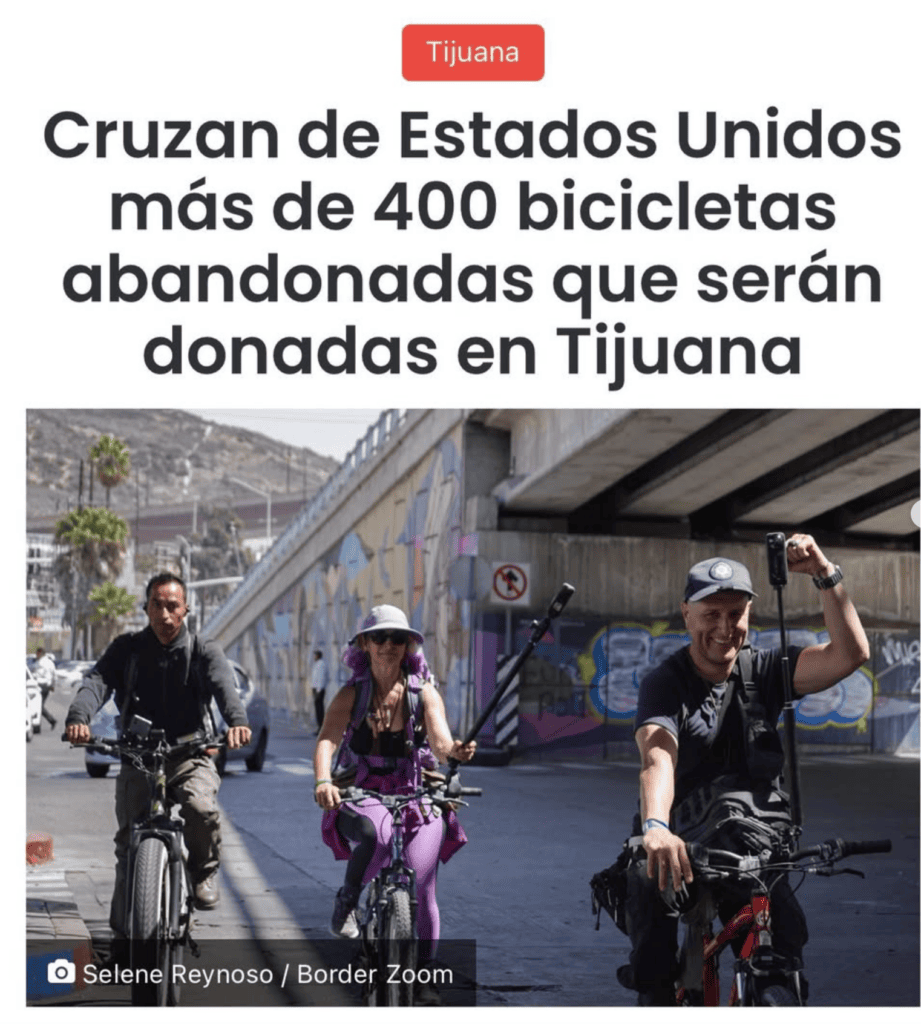
As we emerged from the US border crossing into Tijuana, Mexico, I could hear music. The organizations waiting for the bicycles had made a finish line for us, complete with an inflatable arch, lots of cheering and heartfelt handshakes. After the long trip from Nevada and days unloading, repairing, and preparing them, 500 bicycles recovered through Black Rock City’s Yellow Bike program crossed into Mexico, one by one.
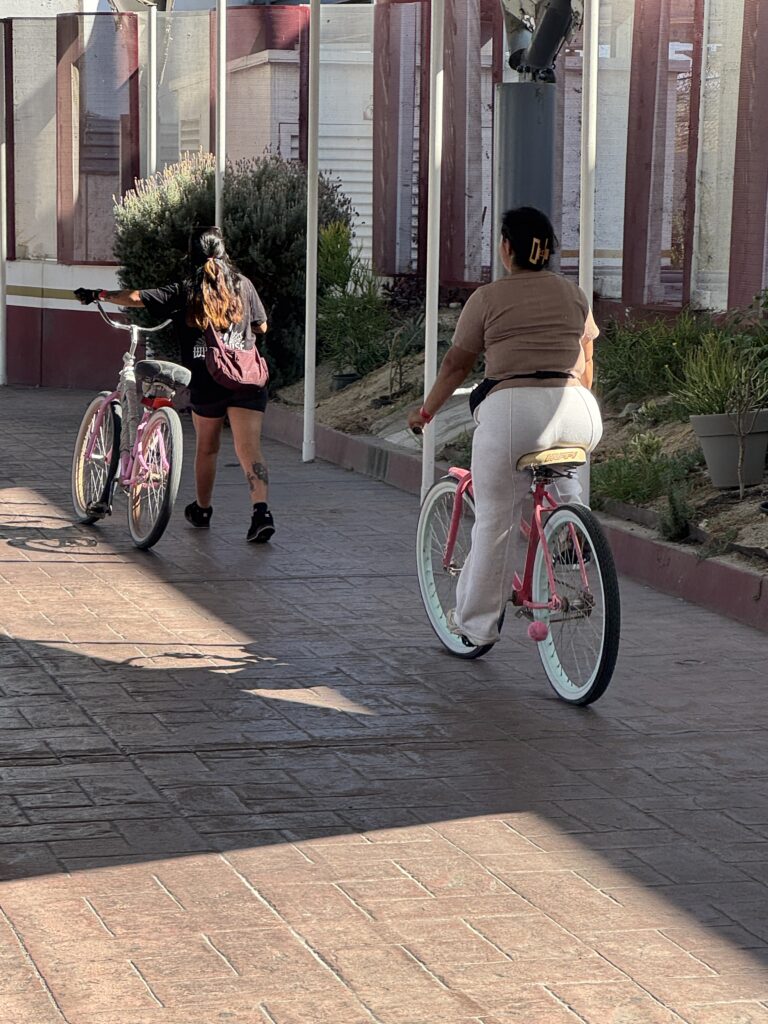
Standing there, it didn’t feel like one community giving and another receiving. It felt familiar: people from different places sharing what they had, figuring things out together, and taking a moment to smile, dance, and celebrate what they had done.
Crossing the border was the most visible moment of a much longer effort. The World Bicyle Forum 12 (Foro Mundial de la Bicicleta 12 A.C.) first reached out to Burners Without Borders three years earlier. What we experienced at the finish line grew from years of conversations, coordination, persistence, and trust.
The bicycles crossed the border in a weekend. The relationships that carried them there took years to build.
From a temporary city to lasting infrastructure
The bicycles had spent just over a week in Black Rock City. Some may have followed the music across the playa at sunrise, carrying riders toward their next adventure. Now they were headed to people whose journeys would look very different.
Receiving partners include YMCA Tijuana, organizations supporting migrants and refugees, mothers searching for missing loved ones, and groups serving remote communities in the Sierra Tarahumara, home to the Rarámuri people. In their hands, a bicycle can put work, school, healthcare, and family within easier reach. For some children, one of these will be the first bicycle they learn to ride.
The people who know these communities best will decide where each bicycle can be most useful: who needs a way to get to school, reach family, or travel farther than they could on foot. Guided by those relationships, something that served a temporary city becomes a part of everyday life for years to come.
The people followed the bicycles
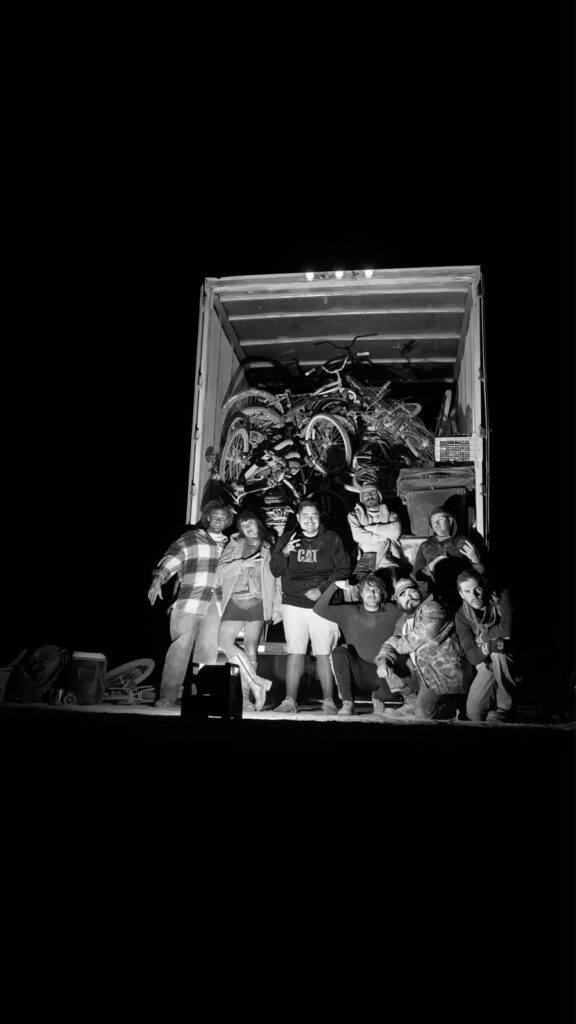
Much of the Yellow Bike team that maintained Black Rock City’s community bicycles continued south after the event. Members from the Burnersphere, DPW, BWB San Diego, and other Burners joined along the way.
That stayed with me. I am continually surprised—though perhaps I shouldn’t be anymore—by how deeply people care. These were Burners who had already given their time to keep the on playa community bikes program running. When Black Rock City ended, they could have considered their work complete. Instead, they trusted the project organizers’ vision for where the bicycles could go next and kept showing up. Others learned about the project online and arrived ready to take on whatever needed doing.
That instinct is central to the work BWB wants to cultivate: looking at what remains after a temporary city disappears and seeing potential rather than waste. The on-playa lumber reclamation program and the transformation of food scraps into compost both grow from this same thinking: the question is not simply how we manage what is left behind, but how we turn a potential problem into a valuable community resource.
On playa, Samuel, one of the organizers, told me, “These bikes will carry the spirit of Black Rock City with them.” I didn’t fully understand what he meant then. After the last bicycle was delivered, I did. The spirit wasn’t in the stickers, lights, or bells still attached to the bikes. It was in everyone who helped move them forward: the people who organized, repaired, transported, taught, rode, and welcomed them. That, I realized, was the spirit Samuel meant.
If culture is what we repeatedly practice together, this was culture in motion.
More than a repair day
By Friday, the warehouse was full of bicycles and people figuring out what each one needed before the crossing. Experienced mechanics worked beside people still learning with the hum of a pressure washer droning on. I watched people arrive with different skills and find a place in the work. Someone would check a brake, show the person next to them what to look for, and move on to the next bike. Around them, volunteers adjusted handlebars, filled tires, made repairs, and found other ways to help. A DJ came by and played music for us. Another woman dropped off water and cupcakes; another rolled up with a full kitchen and cooked home-style food for everyone.
Organizers carried a great deal of responsibility, but they made room for others to take responsibility too. People from more than 15 different organizations contributed what they could, and the project grew through all those hands. By the end of the weekend, hundreds of volunteers had taken part.
What struck me was how seamlessly everyone seemed to work together. A man approached me and said, “You all know each other?” I smiled and explained that in truth most people here did not meet before today. The work in that warehouse would help get the bikes across the border, but the knowledge being shared will travel further. Someone who learned how to do a new repair that day could do it again, or show someone else.
After we loaded the bikes up on Saturday, I shared the concept of a MOOP sweep with the team that had assembled. The sweep was not the most visible or celebratory part of the project. It was simply something that needed to be done—and people stepped forward to do it together.
Those small, unglamorous acts are often where values become real. Culture is not expressed only through the moments captured in photographs. It also lives in what happens afterward, when the tools need to be packed, the floor needs to be swept, and someone has to make sure the gate gets locked on the way out.
Why this matters
The values we practice in Black Rock City do not disappear when the city does. The event brings together people with practical skills, a willingness to improvise, and a desire to innovate. It also generates relationships, materials, ideas and systems that can continue serving a purpose beyond the playa.
At a time when many people are searching for connection and meaningful ways to contribute, projects like this offer a path from intention to action. Participation can extend beyond attending an event. It can mean repairing a bicycle, sharing a skill, building a relationship, or helping an existing resource reach a community where it can make a lasting difference.
The bicycles create access and independence. The project connected people across organizations, communities, and borders. Telling the story helps those lessons travel.
Since 2005, Burners Without Borders has kept the door open for people who want to carry Burning Man culture into their communities to create solutions to things that appear to be problems. Our role is not always to create or lead a project. Often, it is to listen, connect, amplify, and remain in relationship—helping locally led ideas find the collaborators, resources, and visibility they need to grow.
BWB’s work lives at the intersection of response, resilience, and regeneration: meeting immediate needs, strengthening the skills and relationships that help communities endure, and supporting lasting change.
This project demonstrated these concepts beautifully. When the World Bicycle Forum team learned how many bikes were left behind after Burning Man, they reached out to BWB and volunteered with the Yellow Bike team on playa. In San Diego, mechanics shared repair skills while organizations from both sides of the border worked alongside one another, building connections that can outlast the crossing. And through those relationships, 500 bicycles from a temporary city found new purpose with locally rooted organizations in Mexico.
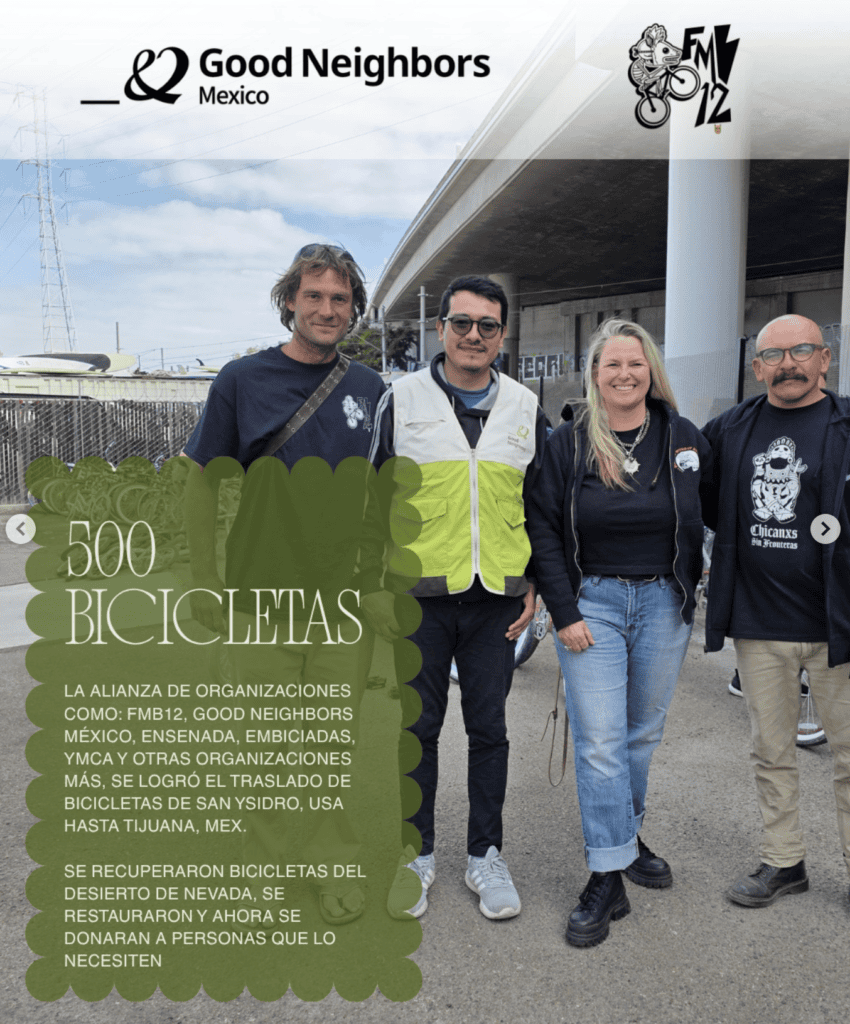
BWB did not own the project. We offered a place for the organizers to bring their idea, stayed connected as it developed, and supported a much larger network of cycling advocates, mechanics, volunteers, and community leaders who each carried a different part of the effort.
Keeping that door open makes room for projects we could never design alone.
What crossed with us
At the finish line, three years of relationship building came into view. The organizations waiting in Tijuana had their own histories, relationships, and work already underway. We arrived with bicycles that could support that work, and with people who had come together to get them there.
Those 500 bicycles will go on to serve different communities in different ways. What stays with me is seeing people use the skills and principles developed at Burning Man to solve real-world problems. Black Rock City gives us a place to practice this culture together; the journey of these bicycles showed how far it can travel when we carry it into the world.
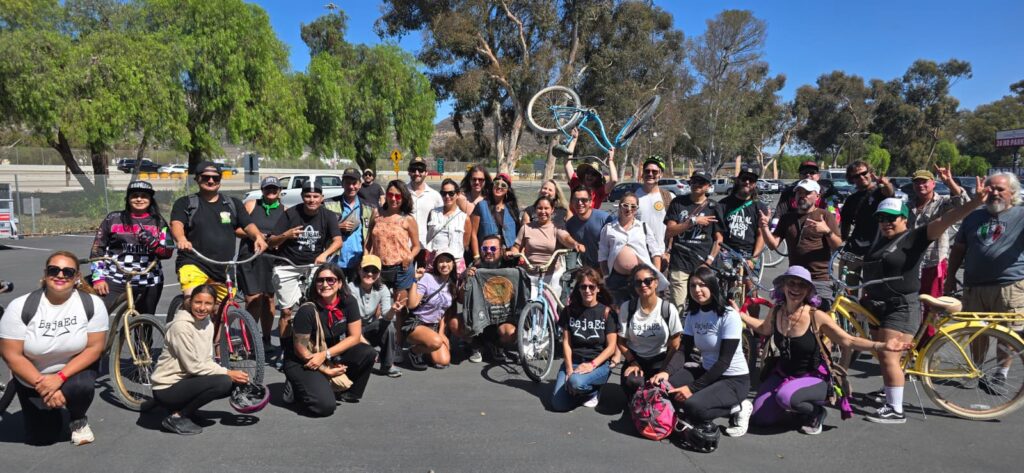
Community organizations that received the bikes include:
- Club Rotario Tijuana Independencia
- Border Angels
- Alianza por la Movilidad Activa A.C.
- 7 en Ruta
- Laboratorio de Invención para la Ciudad A.C. (LABiCi)
- Good Neighbors México
- Border Line Crisis Center
- Alianza para la Salud de las y los Refugiados A.C.
- Semilleros de Vida y Familia A.C.
- YMCA Tijuana
- Chicano Park Museum and Cultural Center
Additional groups that helped prepare and move the bikes