Burners Without Borders at 20: What’s Next & How to Get Involved
December 17, 2025
By Roxane Jessi
This year, we celebrate the 20-year anniversary of Burners Without Borders (BWB), which supports social and community development projects around the world.
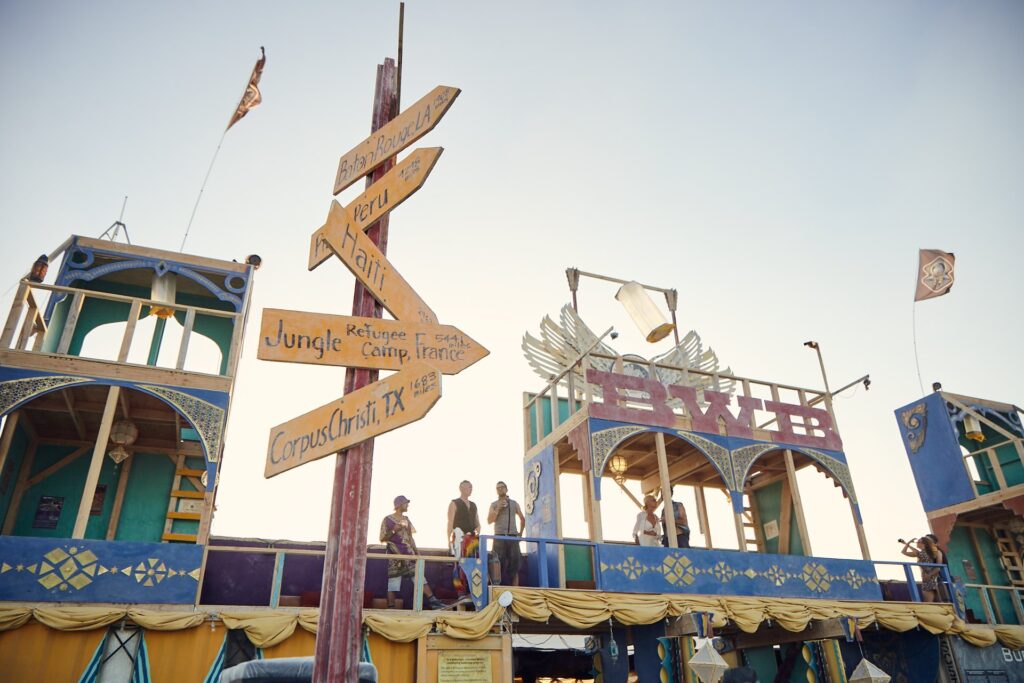
BWB has its roots in action, aligned with the Burning Man principles of participation and civic responsibility. It was set up as a disaster response organisation in response to Hurricane Katrina, before expanding to disasters overseas (Peru, Haiti). Over time, BWB started to decentralize. The focus evolved from “doing the work directly” to “supporting people and organizations already active in their communities”. This evolution of BWB included creating a grant program and launching BWB chapters all over the world.
What began as a global effort has now become more local, showing up in community projects, conscious communities and intentional ways of living together. The mission has evolved to building a broader network that helps people involved in the Burning Man movement (“Burners”) and grassroots groups continue the work they’re already doing, wherever they are.
Members of the BWB community have been involved in hundreds of projects over its history, which were created organically by members of the BWB community. Anyone can propose and initiate a project, and there is no limit to what project you can propose, as long as it responds to a need. Burners are already using their skills and creativity to help their communities in a myriad of ways including combating wildlife poaching using technology, organizing beach clean-ups, building sustainable housing, and supporting people experiencing homelessness.
In the years ahead, BWB will continue to grow. If you’re already working on a local project, we can help you share it and connect you with the broader network. And if you’re just getting started, BWB can support new ideas, collaborations, and the next wave of project leaders. Write to: Jaymie at bwb@burningman.org for more information.
When Hurricane Katrina hit the coast of New Orleans in 2005 during Burning Man week, there was no internet communication on playa. But as soon as word got out in Black Rock City (BRC), news of the tragedy spread quickly, and people responded immediately. I met Tom Price, one of the founders of BWB, who was instrumental in organizing Burners who were providing assistance to those affected by Hurricane Katrina. “For instance, there was a guy from New Orleans who walked to the gate and stood there with a water jug collecting cash for the Red Cross.” In 24 hours, around $25,000 and 42 tons of food and supplies had been collected. At the same time, people were leaving the playa and driving down to the disaster area to help.
The impact of Katrina was huge. When those leaving the playa arrived in New Orleans, they landed in a disaster zone where people had lost everything. But as Tom explains, “going to Burning Man is like boot camp for disaster relief. All of us already knew how to set up and maintain structures in a harsh environment.” And because everyone had a different skill set, and they had access to heavy machinery, they were able to be useful. The leave no trace ethos meant they also instinctively knew how to clean things up.
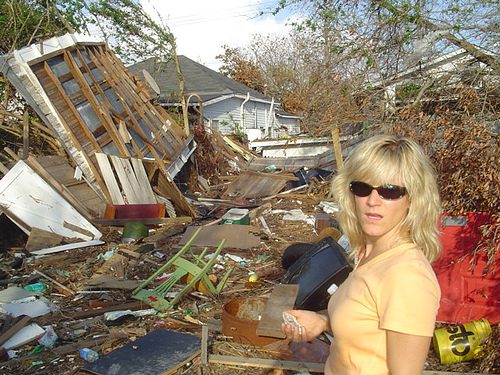


They got to work demolishing houses that had been devastated by the storm (for free), and within weeks the name Burners Without Borders (BWB) was coined. As news spread, large donations started coming in. 300 volunteers came through and figured out ways they could contribute – from demolition to cooking food, to setting up a wifi network. The team eventually provided $1 million worth of demolition and debris removal.
After working solidly for eight months, the crew on-site was starting to feel the strain. Tom goes on, “one of the crew, Richard Scott, grabbed a couple of screw guns, nailed these chairs together into a piece of art, and threw it in the fire.” It provided some kind of catharsis. The local community took notice. On that final Saturday night, a group of locals gathered, many had spent the week collecting the broken remnants of their lives and crafting them into pieces of art. They brought these creations to share, then one by one, threw them into the fire. In that moment, these two different communities of people found connection with each other through creating and destroying art as a means of expression and release.
The people involved in the Katrina effort understood that being “Burners” meant more than participating in an event; it meant figuring out ways they could contribute out in the real world. Following Katrina, disaster response and participation became a part of BWB’s mission. When the Peru (Pisco) earthquake happened in 2007, BWB’s first international operation was launched.
I spoke with Nick Heyming, who has collaborated with BWB since Katrina, and who headed out to Peru to support in the earthquake aftermath. “When I arrived, the whole place was in shambles” and violent crime was rife. “Working with local youth, we reclaimed the neighborhood with street cleanups, block by block, until we got all the way to the pier.”
Nick explained why BWB was successful. “There aren’t many organizations that let people volunteer in a disaster relief effort. For good reason. Most pop up right after a disaster and dissolve quickly. In this way, BWB was unique. It attracted highly skilled engineers, carpenters, architects – people with money, tools, and skills. And it was open to anyone to come and volunteer.”
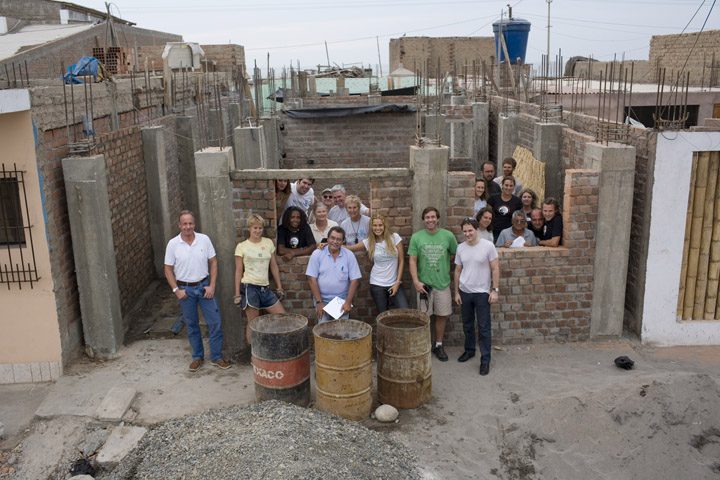
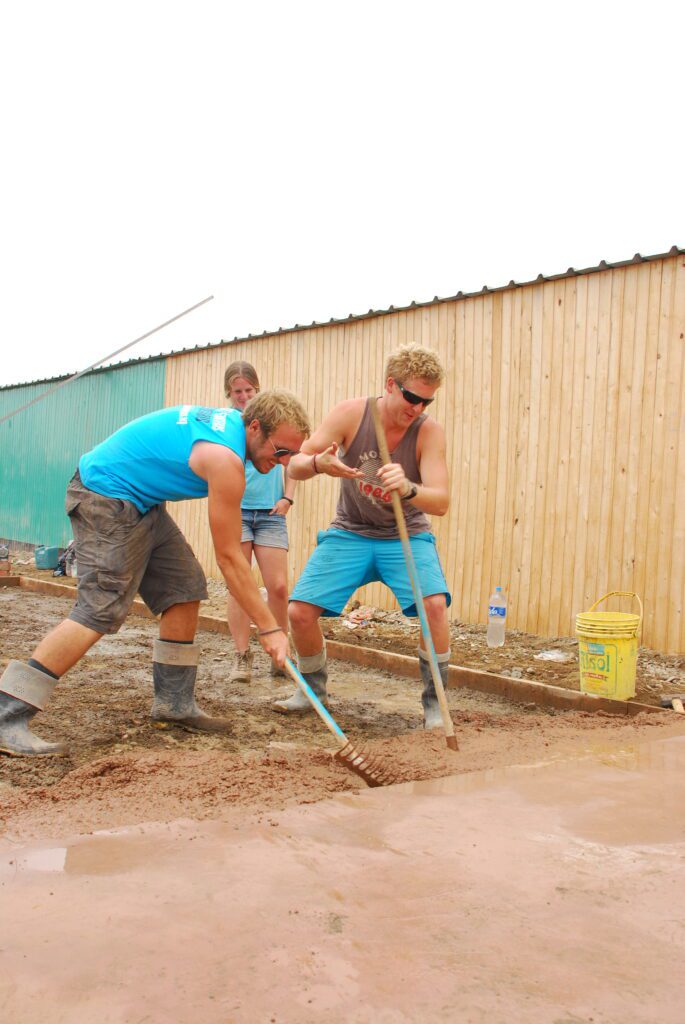
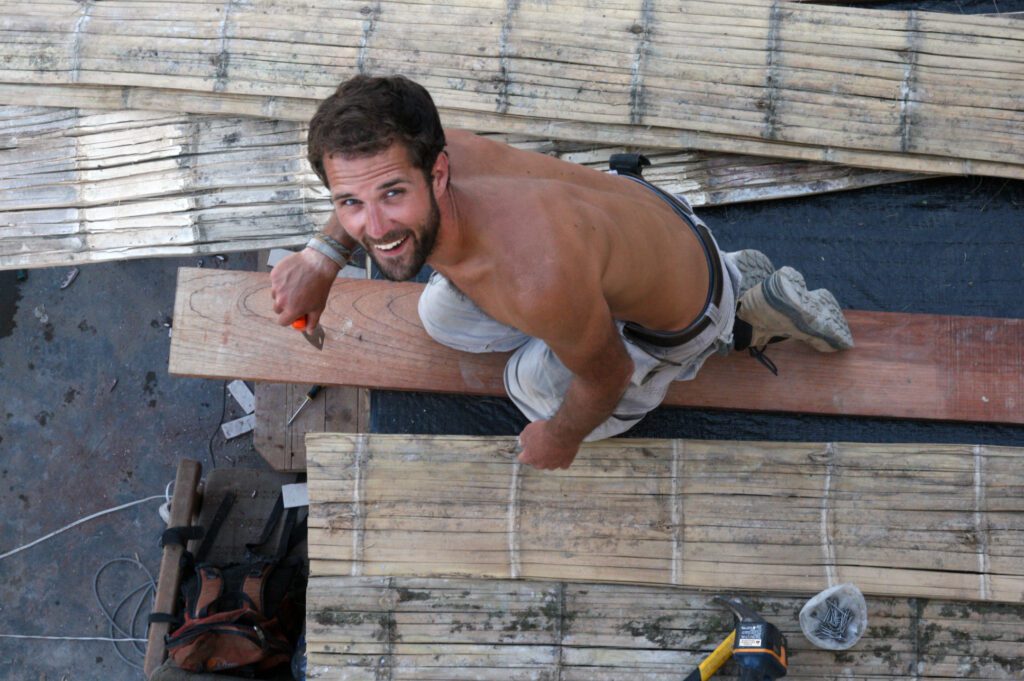
At some point during the Peru project, a major change happened within BWB. The grants program was launched, and BWB’s mission was extended beyond disaster response. By this time, BWB was running operations in Haiti, the Philippines, Greece and Nepal, and the organization was overstretched in terms of ability to provide hands-on support as it had in Katrina. The goal was therefore to decentralize and allow more empowerment of and support for other groups already on the ground.
As Jimmy Levi, who was involved in leading the Peru response effort and now co-leads the BWB Reno Chapter, explains, “localized support and supporting local operations can have a lot bigger impact. We wanted to direct our volunteers and our funding towards partners because they are usually more effective long-term.” The mission evolved to building a larger global network, supporting organisations and Burners already involved in their local communities.
Since launching its grant programs in 2008, BWB has supported hundreds of projects across the globe and helped cultivate more than 35 international chapters. As BWB Project Manager Jaymie Braun explains, the goal is simple: “to give people the opportunity to launch and lead their own projects—ideas that might otherwise never take flight.”
By design, BWB’s micro-grants leverage relatively small amounts of funding to unlock impact, empowering communities to organize and prototype solutions. The ripple effects are real: more than a dozen nonprofits trace their origins to projects first seeded through BWB grants.
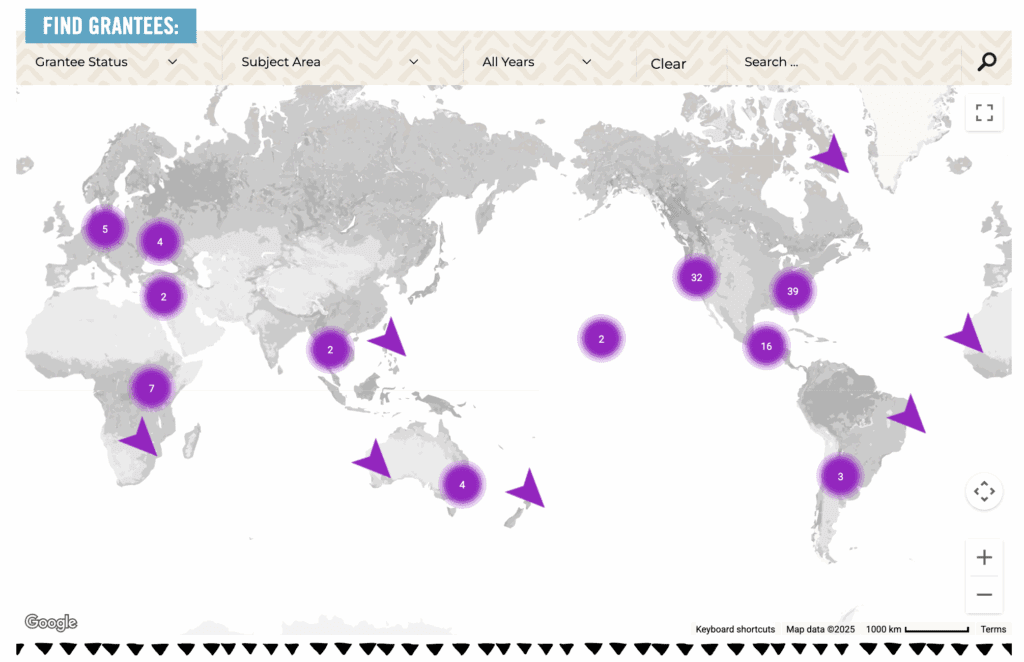
In addition to funding, BWB offers hands-on organizing support and mentorship. “We see ourselves as a platform for experimentation,” Braun says. “If an idea works, we want communities to keep growing it long after BWB support ends.”
In the early days, participation often meant driving straight into disaster zones to volunteer, but as that landscape changed, so did BWB’s approach. Today, the same ethos of participation lives on in a different way: through the invitation to start your own project or chapter, to look for the gaps in service in your community, and to bring the Burning Man spirit of creativity and initiative to meet those needs.
Whether you’re already doing meaningful work or just beginning to explore where you can contribute, BWB is there to help you amplify your impact and to help you tell the story of what you’re building.
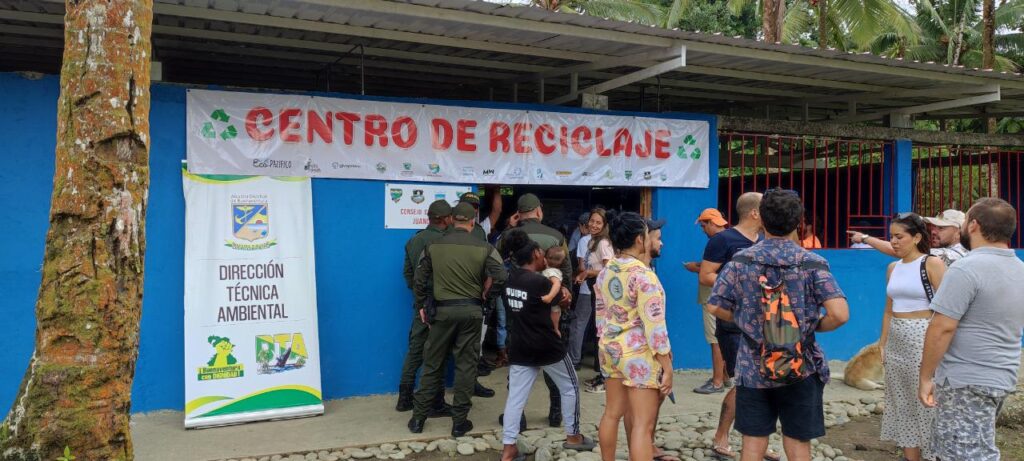
Many have answered the call. For instance, a grant winner from Colombia initially started a beach clean-up and now runs a municipal waste collection and recycling centre called Ecopazifico, which has installed a total of 10 recycling stations on the Pacific coast and 8 more on the Caribbean coast.
In Ukraine, the Temple of Re:creation became a residency that brought together women artists, fostering connection and offering space for reflection and healing during a time of great adversity.
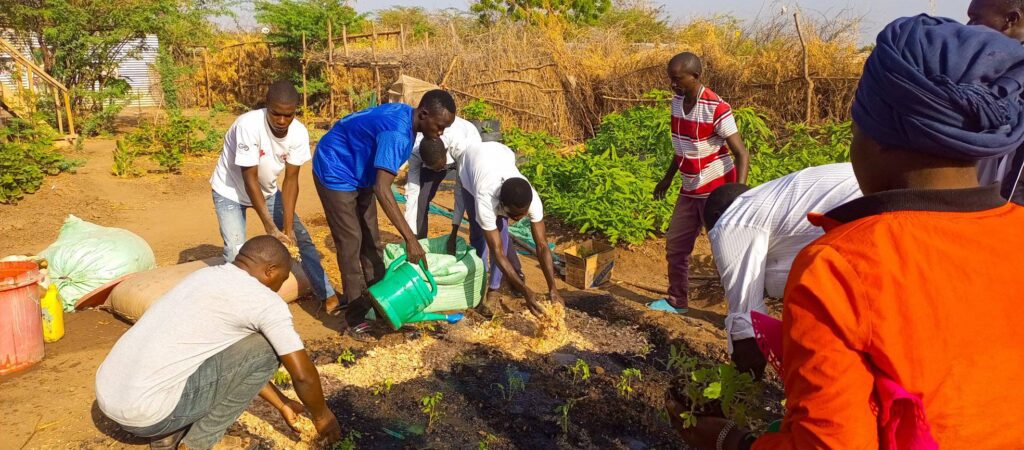
In Kenya, a BWB micro-grant has helped fund a permaculture design workshop at the Kakuma Refugee Camp, which led to the creation of a food forest supported by members of BWB Los Angeles.

So what is next for BWB?
The world today is very different than it was twenty years ago. The kind of climate disaster that hit New Orleans is now happening so frequently we’re becoming numb to it. In the U.S alone, there have been devastating floods and massive fires. Major suburbs of cities like Los Angeles and Asheville, North Carolina have been lost, something that hadn’t been seen since Katrina.
We’ve spent years preparing communities, and yet the crises keep piling up. It’s no longer one disaster every decade, it’s a flood, a fire, a pandemic, a political crisis, all happening at once. Back in 2005, there were no phones on playa. A disaster had to be monumental to break through. Now, we get disaster alerts in real time. We’re globally connected, and with that connection comes exposure to an overwhelming number of crises.
The challenge now is to pause and ask: how can we most effectively influence systems? How can we stop just putting Band-Aids on a broken framework? As Jennie Kay, who sits on the BWB advisory board, visually explains “I’ve hung drywall in hurricane zones countless times. And I know that drywall will grow mold again in two years when the next flood comes. So why am I investing my time, energy, and community resources to rebuild a system I know is flawed?” That’s the question we must lean into, which serves as an invitation for the community to help imagine new possibilities.
Burning Man, including BRC and the many regional events around the world, offers practical training for large groups of people to co-create and operate within temporary sites. The events serve a deeper social function in that they teach us how to manage and share resources, generate and store energy, handle waste, and navigate interpersonal relationships.
On playa during Black Rock City, the BWB camp embodies this function. It serves as a hub for various sustainability initiatives: BLAST (Burner Leadership Achieving Sustainable Theme camps), RAT (Renewable Artists Team), a new solar donation station with the BRC Solar Team, and provides ongoing support for the Black Rock Compost Program and the Green Corridor. In many ways, it models what a green theme camp, and sustainable Burning can be.
BWB also hosts an annual Spring Summit, which I was lucky enough to attend in 2025. It is held at Fly Ranch, a beautiful and remote 3,600-acre living lab that serves as a testing ground for regenerative design and community prototyping. Fly Ranch is located just 10 miles from Gate Road where Black Rock city is held, flanked by the same towering Nevada mountains and surrounded by dusty wilderness.
Over three days in mid-May, 99 people gathered for this off-grid camping event, weathering the playa elements and a freezing cold storm front, huddling around fires at night like Burners do best. During the day, we worked on the land, learnt skills including hide tanning and harvesting honey, and took part in discussions on disaster response and the future of mutual aid. In true Burner fashion, the event was participant-led, without a set agenda, and collectively, we started imagining what the next 20 years of BWB’s story would look like. It felt poignant to do so just miles from where the Burning Man event that birthed the BWB movement is held every year.
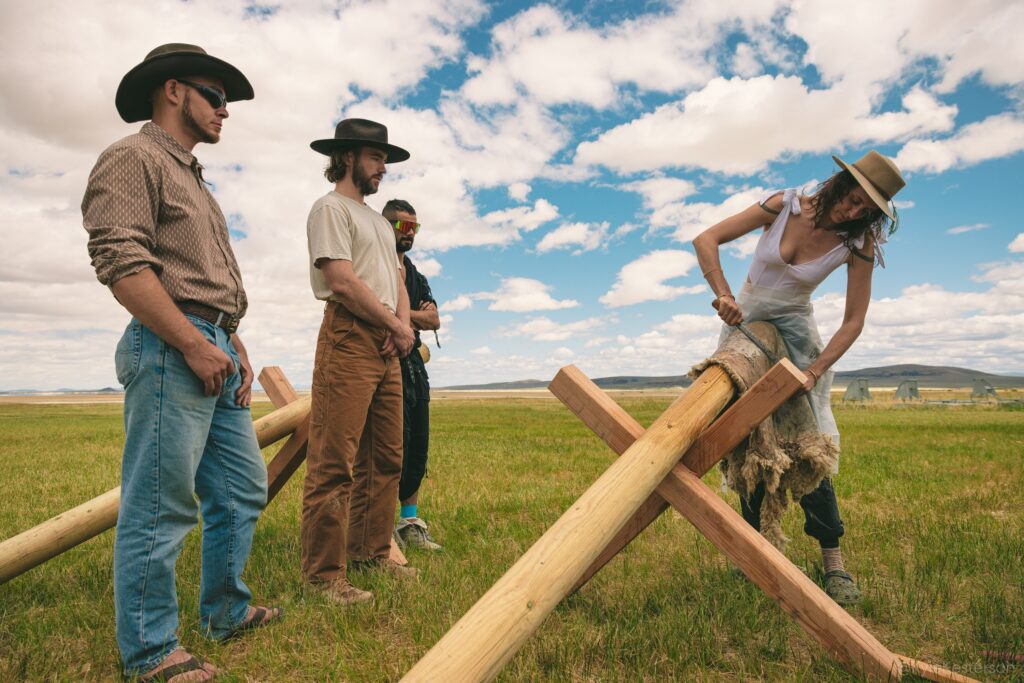
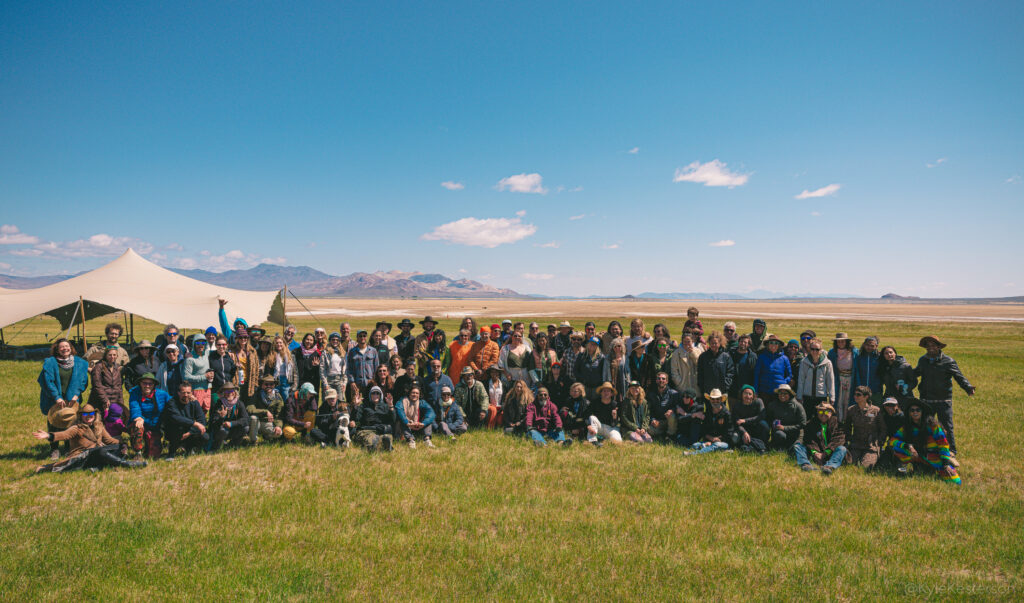
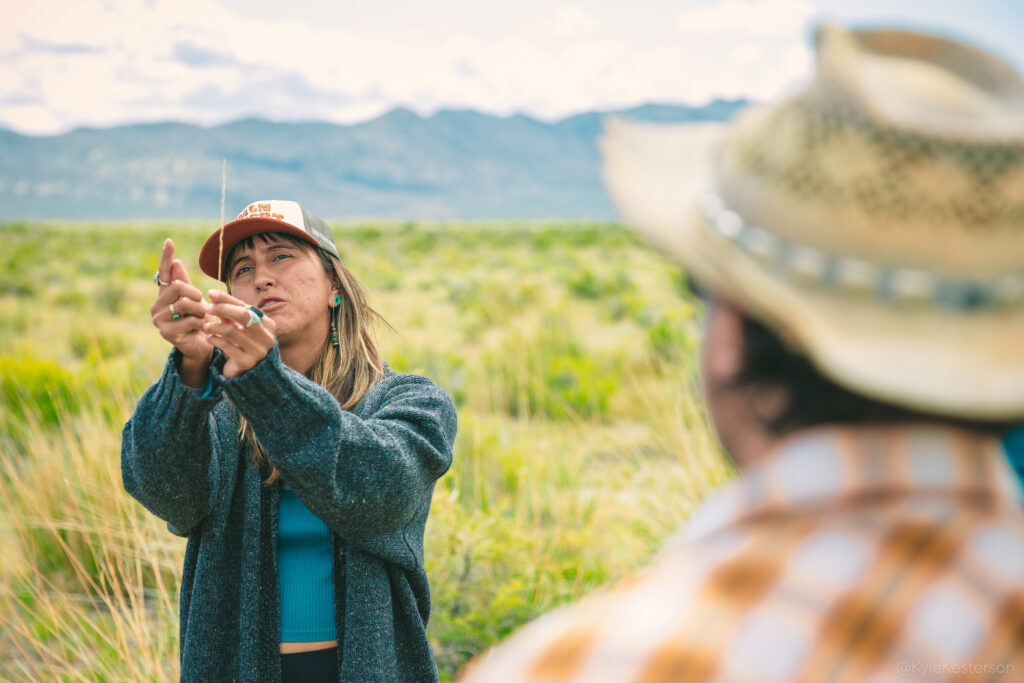
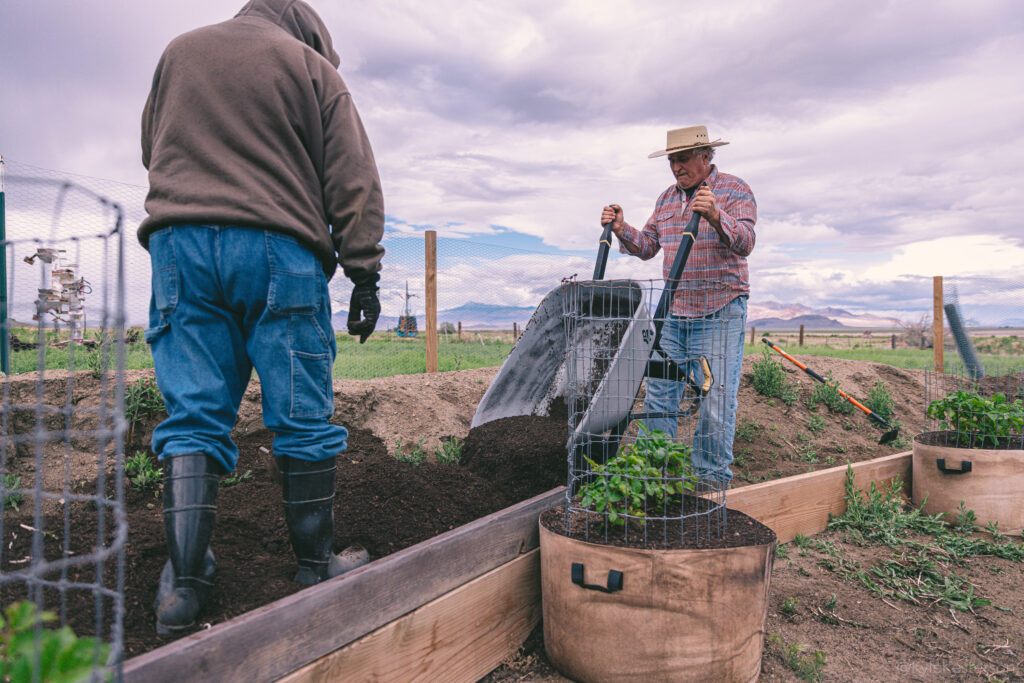
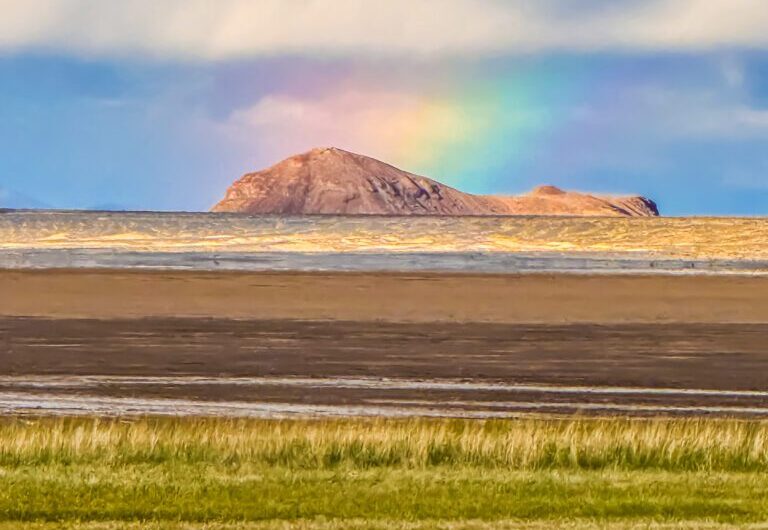
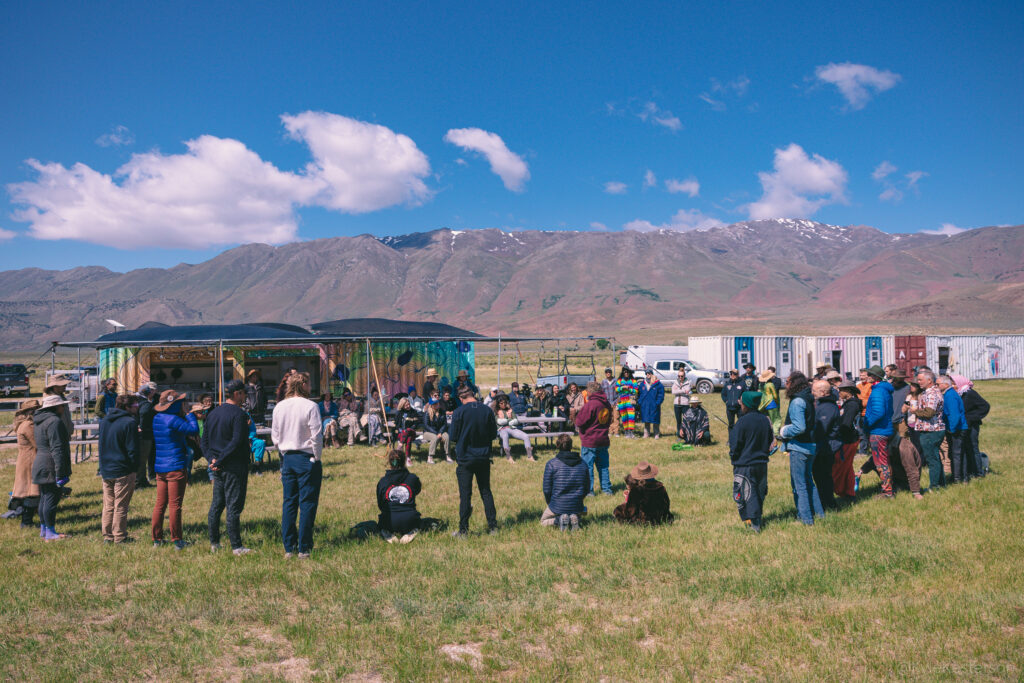
2025 BWB Spring Summit at Fly Ranch. Photo Credit Kyle Kesterson.
—————————
Beyond its events and projects, BWB has inspired people to action, creating alternative and more sustainable ways of living such as setting up or joining intentional communities year-round. Two of BWB’s long-term collaborators have done just that. Nick Heyming joined forces with a group of ten friends to set up the Emerald Village Oasis (EVO), an experiment in community living where residents collaborate to live on the land, nestled above the hills of San Diego.
In another experiment, Richard Scott lives an alternative lifestyle in Bombay Beach, a town struck by environmental disaster which was abandoned for decades before being rebuilt by its citizens into an artist community. Its once dilapidated streets are now lined with colorful murals and striking sculptures, and it has a thriving community. Bombay Beach is a stark example of what happens when environmental collapse goes unchecked – a reality we may all be edging toward – and the power of community in bringing it back from the brink. As BWB founding member Tom Price puts it, “I’m convinced that climate change is going to fundamentally break the society that we all live in. And when that disaster comes, it’s going to be the intentional communities we are part of that will give us the resilience to survive.”
As it looks towards the future, BWB is redefining itself as a platform that supports people in enacting the change they want to see in their communities. In that way it helps people find direction and agency in the chaos of the modern-day world. As Jennie Kay, a BWB Advisory Board Member says “the Burning Man movement and BWB reminds our community of their strength, their ability, and the power of human connection. It can be a large project in Peru, or it can be as simple as attending a city council meeting, or simply checking in on your neighbor.” Her hope for BWB is that we truly embrace the “without borders” part, not just working within Burner spaces, but inspiring Burners to influence every community they touch. Beyond larger-scale, permanent projects, BWB also lives in more subtle everyday acts.
Call to Action
BWB has changed over the years, from a disaster response organization to a network of global projects. Today, involvement begins wherever you are, by recognizing the gaps in your community and answering them.
Doxie from Detroit did just that when she saw neighbors living under bridges in Michigan’s freezing winters. In response, she raised money to distribute survival backpacks to people experiencing homelessness. What began as one person taking action is now a group of neighbors who meet regularly, building lasting friendships along the way. Stories like this remind us that real impact comes from people who see a need and choose to act.
Beyond the Playa, there are countless ways to show up for our communities. Many are already doing this; others just need a helping hand or supportive network to help them take that first step. Perhaps Benjamin Rexroad, puts it best: his advice for starting a new project is simply: “Just f’ing do it.” BWB is here to help you turn your ideas into action, or tell your story if you already are.
Write to Jaymie Braun: bwb@burningman.org to get involved.

Roxane Jessi is an aid worker and roving Burner who has participated in more than a dozen different Burns around the globe. In 2023 Burning Man Publishing released her new book, “Once Upon a Time in the Dust, Burning Man Around the World,” which chronicles the year she spent participating in seven Regional Burning Man Events on six continents.